Flat roofs are a popular feature of many modern homes, additions, garages, porches, and other residential structures. Their clean appearance, practical design, and efficient use of space make them an appealing option for homeowners. However, a flat roof requires specialized materials and installation techniques to provide dependable protection against moisture, temperature changes, and everyday weather conditions.
A successful flat roof installation involves more than placing a roofing membrane over a surface. The process includes evaluating the roof structure, preparing the decking, selecting suitable materials, creating effective drainage, and carefully sealing vulnerable areas. Each step contributes to the roof’s durability and performance.
For homeowners in Arlington, VA, and the surrounding areas, choosing the right roofing system is especially important. Seasonal rainfall, humidity, summer heat, and winter temperature changes can place stress on roofing materials. A professionally installed flat roof can help protect the home while supporting energy efficiency and long-term value.
Understanding Residential Flat Roofs
A flat roof is a roofing system with a very low slope. Although it may appear completely level, it generally includes a slight pitch that encourages water to move toward drains, gutters, or designated drainage areas.
Flat roofs are commonly found on modern residential designs, home extensions, garages, sunrooms, and certain townhouses. Some homes also have flat roof sections that connect to larger sloped roofing areas.
Unlike traditional sloped roofs that use overlapping shingles to shed water, flat roofing systems often rely on continuous waterproof membranes. These membranes create a protective barrier that helps prevent moisture from reaching the underlying roof structure.
A properly planned flat roof installation considers the roof’s dimensions, drainage layout, structural condition, insulation needs, and exposure to the elements. These details help determine which roofing material and installation method are most appropriate.
Flat roofing systems can be practical for homeowners who want a contemporary appearance or need a roofing solution for a specific section of their property.
Benefits of Flat Roof Installation for Homeowners
Flat roofs offer several advantages when they are designed and installed with the property’s needs in mind.
Modern and Attractive Appearance
Flat roofs complement contemporary architectural styles. Their simple lines create a streamlined appearance that can make a home look modern and distinctive.
They also work well with residential additions, garages, and other structures where a traditional sloped roof may not fit the desired design.
Efficient Use of Space
A flat roof can provide opportunities for functional rooftop areas when the structure is designed to support their intended use. Depending on the project, homeowners may consider rooftop patios, seating areas, or other outdoor features.
Even when the roof is not intended for regular occupancy, its layout can make certain maintenance activities more accessible than those involving steep slopes.
Practical Design for Home Additions
Flat roofing is often a convenient choice for additions that connect to existing homes. Sunrooms, extensions, garages, and covered areas may benefit from a low-profile roofing design.
A carefully planned flat roof installation can help the new roof section blend with the existing structure while maintaining dependable protection against moisture.
Potential Energy Efficiency Improvements
The roofing materials and insulation selected for a flat roof can influence the home’s thermal performance. Reflective roofing membranes may help reduce the amount of solar heat absorbed by the roof surface.
Insulation can also help limit heat transfer between the home’s interior and the outdoor environment. When combined with appropriate ventilation and air sealing, these features may contribute to more consistent indoor temperatures.
Easier Access for Certain Maintenance Tasks
Flat and low-slope roofs may provide more convenient access for professional inspections and maintenance. Roof drains, membrane seams, and rooftop equipment can often be reached without navigating a steep surface.
However, flat roofs still require appropriate safety precautions. Homeowners should avoid walking on roofing membranes unless the roof is designed for foot traffic.
Common Materials Used in Flat Roof Installation
Choosing the right roofing material is an important part of any flat roof installation project. Different materials offer unique advantages related to durability, flexibility, cost, maintenance, and energy performance.
Thermoplastic Polyolefin (TPO)
TPO is a single-ply roofing membrane commonly used on flat and low-slope roofs. It is typically available in large sheets that are installed over a prepared roofing surface.
Many TPO membranes feature light-colored surfaces that reflect sunlight. This can help reduce heat absorption during warmer months.
TPO seams are commonly joined using heat welding, creating a continuous connection between membrane sections. Proper seam preparation and welding are important for preventing water infiltration.
TPO roofing installation requires careful preparation, accurate membrane placement, and properly welded seams. The roofing surface must be clean and suitable for the selected membrane system to ensure reliable attachment and performance.
Benefits of TPO roofing include:
- Reflective surface options
- Relatively lightweight construction
- Heat-welded seams
- Resistance to certain forms of weathering
- Compatibility with various insulation systems
TPO may be a suitable choice for homeowners looking for a modern, energy-conscious roofing solution. Professional TPO roofing installation helps ensure that the membrane, seams, and flashing work together to provide dependable protection.
Ethylene Propylene Diene Monomer (EPDM)
EPDM is a synthetic rubber roofing membrane known for its flexibility and durability. It is frequently used on residential low-slope roofs, garages, and home additions.
Its flexibility allows it to accommodate some movement caused by temperature changes. EPDM is also available in large sheets, which can reduce the number of seams required for certain roof layouts.
EPDM roofing installation involves preparing the roof surface, positioning the rubber membrane, and securing it using compatible adhesives or mechanical attachment systems, depending on the product and roofing design.
Common benefits include:
- Flexible rubber construction
- Resistance to outdoor weather exposure
- Reliable performance when properly installed
- Available in different thicknesses
- Suitability for many residential low-slope applications
EPDM is often available in black, which absorbs more solar heat than lighter-colored membranes. Homeowners should consider the roof’s exposure and energy goals when selecting this material.
Proper EPDM roofing installation also requires attention to seams, flashing, roof penetrations, and edge details. These areas must be carefully finished to help prevent moisture from entering the roofing assembly.
Modified Bitumen Roofing
Modified bitumen is an asphalt-based roofing material reinforced with additional components to improve flexibility and performance.
It is commonly installed in multiple layers or as a membrane system with reinforced surfaces. Depending on the product, installation may involve self-adhered sheets, adhesives, or other specialized techniques.
Modified bitumen can be useful for roofs that need a durable, multi-layered waterproofing system.
Its advantages may include:
- Reinforced construction
- Resistance to everyday weather exposure
- Multiple installation options
- Practical repairability
- Suitability for certain residential low-slope roofs
The installation method should be selected carefully based on the roofing system, property conditions, and material manufacturer’s recommendations.
Built-Up Roofing (BUR)
Built-up roofing consists of multiple layers of roofing felt and bitumen, often finished with a protective surface layer.
This traditional roofing system creates a layered barrier against moisture. Its multiple components can provide additional protection when installed correctly.
Built-up roofing may offer:
- Multi-layer waterproofing
- Durable construction
- Protection against regular weather exposure
- A long history of use in low-slope roofing applications
BUR systems can be heavier and more labor-intensive than some single-ply alternatives. A professional evaluation is important before selecting this option for a residential structure.
Polyvinyl Chloride (PVC)
PVC roofing is another single-ply membrane used for flat and low-slope roofs. Its seams are commonly heat-welded, helping create a watertight surface.
PVC is known for its resistance to certain chemicals, moisture, and outdoor exposure. Some PVC products also feature reflective surfaces that can support energy-conscious roofing designs.
Potential advantages include:
- Heat-welded seams
- Reflective membrane options
- Resistance to moisture
- Durable membrane construction
- Compatibility with selected residential roofing applications
The best material depends on the roof’s size, layout, budget, and performance goals.
Flat Roof Installation Methods
Roofing materials can be installed using different methods. The appropriate approach depends on the selected membrane, roof structure, insulation system, and project conditions.
Fully Adhered Installation
In a fully adhered system, roofing membranes are secured to the prepared surface using compatible adhesives.
This method creates a closely bonded roofing assembly. It can provide a neat appearance and reduce movement of the membrane across the roof surface.
This installation method is commonly used for certain EPDM roofing installation projects, although the specific adhesive and application process must follow the manufacturer’s requirements.
The installation team must prepare the substrate carefully. Dust, debris, moisture, and surface irregularities can interfere with adhesion.
Fully adhered systems may be suitable for residential roofs where a secure, uniform membrane application is desired.
Mechanically Attached Installation
Mechanically attached systems use specialized fasteners to secure roofing components to the underlying roof structure.
The membrane is attached at designated locations, and seams are joined according to the material’s installation process.
This method can be efficient for certain roofing layouts. Proper fastener placement and secure attachment are important for the system’s overall performance.
Depending on the roofing product, mechanically attached systems may be used for TPO roofing installation and other single-ply membrane applications.
Ballasted Installation
A ballasted roofing system uses weight, such as selected stones or pavers, to hold roofing components in place.
This approach is not suitable for every residential roof. The structure must be able to support the additional weight, and the system must be designed to accommodate drainage and other roof features.
Ballasted systems are generally considered only when the roof’s construction and project requirements make them appropriate.
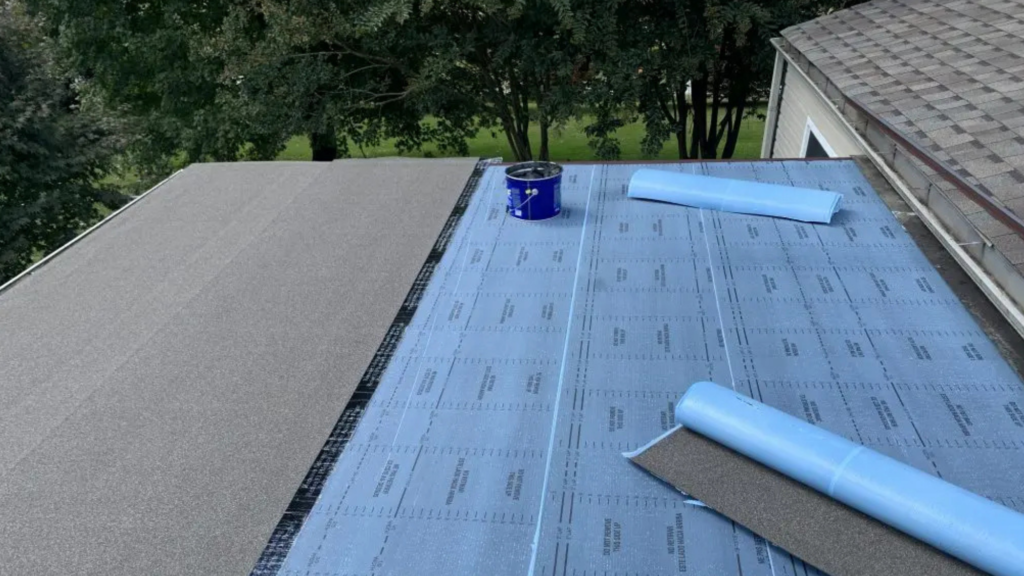
Self-Adhered Membrane Installation
Self-adhered roofing membranes include an adhesive backing that bonds to a prepared surface.
This method can reduce the need for certain application equipment. It is often used with modified bitumen roofing products.
Successful installation depends on clean surfaces, suitable temperatures, correct positioning, and careful bonding.
The Flat Roof Installation Process
A professional flat roof installation follows a sequence of important steps. Each stage helps create a roofing system that can withstand everyday weather exposure and protect the home.
1. Initial Roof Assessment
The project begins with an evaluation of the existing roof and the structure beneath it.
The roofing team reviews the roof’s dimensions, slope, drainage features, surface condition, and potential problem areas. If an existing roof is being replaced, the assessment may include identifying moisture damage, deteriorated materials, or areas that need additional attention.
This evaluation helps determine the scope of the project and identify suitable roofing options, including whether TPO roofing installation or EPDM roofing installation would be appropriate.
2. Preparation of the Roof Surface
Before the new roofing materials are installed, the roof surface must be prepared.
Depending on the project, preparation may involve removing old roofing materials, clearing debris, and addressing damaged sections of the decking.
A clean and stable surface helps support the new roofing system. Any deteriorated areas should be evaluated and repaired before the installation continues.
Proper preparation is particularly important for TPO and EPDM roofing installation because surface conditions can affect membrane attachment and overall performance.
3. Roof Deck Inspection
The roof deck provides the foundation for the roofing assembly.
The installation team checks the decking for signs of damage, moisture, deterioration, or instability. Areas that cannot properly support the roofing materials may require repair or replacement.
A sound deck is important because problems beneath the membrane can affect the entire roofing system.
4. Insulation Installation
Insulation may be installed as part of the flat roof assembly.
The type and placement of insulation depend on the home’s design, existing conditions, and energy-efficiency goals. Insulation boards may be positioned above the roof deck or incorporated into another suitable roofing configuration.
Proper installation helps reduce heat transfer and can improve indoor comfort.
5. Drainage Planning
Drainage is one of the most important considerations in flat roof installation.
Although flat roofs have a low slope, water still needs a reliable path away from the surface. Depending on the roof design, drainage may involve internal drains, scuppers, gutters, or other features.
The roofing team considers how water will move across the roof and identifies areas where water could collect.
Effective drainage helps reduce prolonged moisture exposure and supports the roof’s long-term performance.
6. Membrane Installation
Once the surface, insulation, and drainage components are prepared, the roofing membrane is installed.
The installation method varies according to the selected material. TPO membranes are commonly heat-welded at the seams, while EPDM membranes may use adhesives or other compatible joining methods.
During TPO roofing installation, proper heat application and seam preparation are essential for creating secure connections between membrane sections.
Similarly, EPDM roofing installation requires careful membrane positioning, bonding, and seam treatment to help maintain a continuous waterproofing barrier.
Membrane placement requires attention to alignment, attachment, and seam preparation. Poorly installed seams can become vulnerable areas where water may enter.
7. Flashing and Roof Edge Installation
Flashing protects the areas where the roofing membrane meets walls, roof edges, vents, pipes, and other features.
These transitions are especially important because they interrupt the main roofing surface. Water can enter through poorly sealed connections.
The roofing team installs suitable flashing and edge components to help create a continuous protective barrier. These details are especially important in both TPO and EPDM roofing installation because the membrane must be properly integrated with surrounding roof components.
8. Final Inspection and Cleanup
After the roofing system is installed, the team reviews the completed work.
The inspection may include checking membrane seams, flashing, roof edges, drainage features, and visible installation details.
Debris and unused materials are removed from the work area. A final review helps identify concerns that should be addressed before the project is considered complete.
Drainage and Waterproofing Considerations
Water management is central to the success of any flat roof installation.
A roof with poor drainage can allow water to remain on the surface for extended periods. This condition, often called ponding water, may increase stress on roofing materials and contribute to premature deterioration.
Preventing Ponding Water
A properly planned roof includes a drainage layout that encourages water to move toward designated collection points.
Drainage features should be kept clear of leaves, dirt, and other debris. Homeowners should also pay attention to areas where water repeatedly collects after rainfall.
Persistent ponding may indicate that the roof’s drainage design or surface needs professional attention.
Protecting Roof Penetrations
Pipes, vents, and other roof penetrations create openings in the roofing surface.
These areas require compatible flashing and careful sealing. A small defect around a penetration can allow moisture to reach the underlying structure.
Regular inspections help identify deteriorating seals before they become larger problems.
Maintaining Roof Edges and Wall Connections
Flat roofs often connect to parapet walls, adjoining structures, and roof edges.
These transitions should be protected with suitable flashing and edge details. The membrane should be securely integrated with the surrounding components to reduce the risk of water infiltration.
Energy Efficiency and Flat Roofing
A flat roof can contribute to a home’s energy performance when the roofing materials and insulation are selected appropriately.
Reflective Roofing Materials
Some roofing membranes feature light-colored or reflective surfaces. These materials can reflect a portion of the sun’s energy rather than absorbing it.
Reflective roofing may help reduce roof surface temperatures during sunny weather. The actual benefit depends on factors such as roof exposure, insulation, indoor cooling needs, and the overall building design.
For homeowners considering TPO roofing installation, the availability of light-colored reflective membrane options may be an important factor when comparing roofing systems.
Proper Insulation
Insulation helps reduce heat transfer through the roof.
A well-insulated roof can support more consistent indoor temperatures and may reduce the workload on heating and cooling equipment.
The insulation system should be selected based on the home’s existing construction and the intended performance of the roofing assembly.
Reducing Moisture-Related Problems
Moisture can affect insulation performance and the condition of the roof structure.
Proper drainage, effective waterproofing, and timely maintenance help reduce the likelihood of moisture entering the roofing assembly.
Common Flat Roof Problems Homeowners Should Watch For
Even a professionally installed roof requires ongoing attention. Recognizing early warning signs can help homeowners address issues before they become more extensive.
Water Leaks
Water stains on ceilings or walls may indicate a roofing problem.
Leaks can develop around membrane seams, flashing, roof penetrations, or drainage features. The source of a leak may not be directly above the interior stain, making professional inspection helpful.
Blistering or Bubbling
Blisters or bubbles in the roofing membrane may occur when air or moisture becomes trapped beneath the surface.
These areas can weaken over time. A roofing professional can determine whether the affected section needs repair.
Cracks and Membrane Separation
Membrane cracks, open seams, or separated roofing components can create pathways for water infiltration.
Temperature changes, aging materials, and installation issues may contribute to these conditions.
Damaged Flashing
Flashing can deteriorate, loosen, or separate from surrounding surfaces.
Because flashing protects roof transitions, damaged sections should be addressed promptly.
Clogged Drains and Gutters
Debris can block roof drains, scuppers, and gutters.
Blocked drainage can cause water to accumulate on the roof. Routine cleaning and inspection help maintain proper water flow.
Factors That Affect Flat Roof Installation Costs
The cost of flat roof installation varies depending on the size and complexity of the project.
Roofing Material
Different roofing membranes have different material and installation costs.
TPO, EPDM, PVC, modified bitumen, and built-up roofing each have unique characteristics. The price of the selected system depends on material quality, thickness, availability, and installation requirements.
For example, TPO roofing installation and EPDM roofing installation may involve different material expenses, attachment methods, labor requirements, and seam preparation techniques.
Homeowners should compare the benefits and overall installation requirements of each option rather than choosing a roofing system based on material price alone.
Roof Size
Larger roofs generally require more materials and labor.
The total cost also depends on the roof’s layout. A simple, open roof may be easier to install than one with multiple edges, penetrations, and transitions.
Existing Roof Condition
If the existing roof contains damaged decking or deteriorated insulation, additional work may be necessary.
Addressing these issues before installing the new membrane helps create a more reliable roofing foundation.
Drainage Requirements
Drainage components can affect the project’s overall cost.
The installation may involve improving roof slope, replacing drains, modifying gutters, or addressing areas where water collects.
Labor and Installation Complexity
Specialized roofing systems require experienced installation.
Labor costs may vary according to the material, access to the roof, project size, and details that must be completed around walls, edges, and penetrations.
Homeowners should compare estimates based on the complete roofing scope rather than focusing only on the initial material price.
Maintenance Tips for Flat Roofs
Routine maintenance helps protect the investment made in a new flat roof installation.
Schedule Professional Inspections
Professional inspections can identify early signs of membrane deterioration, flashing problems, and drainage concerns.
Inspections are especially valuable after severe weather or when homeowners notice changes inside the property.
Keep Drainage Areas Clear
Leaves, branches, dirt, and other debris should not be allowed to accumulate around drains and gutters.
Maintaining clear drainage pathways helps prevent water from collecting on the roof.
Monitor the Roofing Membrane
Homeowners should look for visible cracks, loose seams, bubbling, or damaged areas.
Any suspected roofing issue should be evaluated by a professional rather than covered with an improvised repair.
Address Leaks Promptly
Even a small leak can lead to interior damage if moisture continues to enter the home.
Prompt attention helps limit damage to ceilings, walls, insulation, and other building components.
Avoid Unnecessary Foot Traffic
Foot traffic can damage some roofing membranes.
Homeowners should avoid using the roof as a regular walking area unless it is specifically designed for that purpose.
When Flat Roof Replacement May Be Necessary
Repairs can address certain localized roofing problems, but replacement may be appropriate when the roofing system has reached the end of its useful life or has widespread deterioration.
Signs that a roof may need replacement include:
- Repeated leaks in different areas
- Extensive membrane cracking or separation
- Persistent drainage problems
- Widespread water damage beneath the roofing surface
- Deteriorated insulation or decking
- Frequent repairs that no longer provide dependable results
A professional assessment can help determine whether repair or replacement is the more practical option. Depending on the roof’s condition, homeowners may also explore newer systems, including TPO roofing installation or EPDM roofing installation, as potential replacement solutions.
Choosing a Flat Roof System for Your Arlington Home
Homeowners in Arlington, VA, and the surrounding areas should consider several factors when selecting a roofing system.
The roof’s design and structural condition are important starting points. A roofing material that works well on one home may not be suitable for another.
Climate exposure also matters. Seasonal rainfall, humidity, summer heat, and temperature changes can influence material selection and maintenance needs.
Homeowners should also consider the project’s budget, expected service life, energy-efficiency goals, and the amount of maintenance they are comfortable performing.
TPO and EPDM are two common options worth discussing when planning a residential flat roof. TPO offers reflective membrane options and heat-welded seams, while EPDM provides a flexible rubber membrane that can accommodate certain temperature-related movements.
The choice between TPO roofing installation and EPDM roofing installation depends on the property’s specific requirements, roof design, and performance priorities.
Painter Roofing can help homeowners understand the options available for their properties. A professional evaluation provides useful information about the roof’s condition and the materials that may be appropriate.
Why Professional Flat Roof Installation Matters
The quality of installation has a significant influence on how well a flat roof performs.
Roofing membranes must be properly secured, seams must be joined carefully, and flashing must protect vulnerable transitions. Drainage components also need to work together with the roofing surface.
An experienced roofing team understands how these details affect the completed system.
Professional flat roof installation helps reduce the risk of preventable issues such as leaks, poor drainage, and premature membrane deterioration. Whether the project involves TPO roofing installation, EPDM roofing installation, or another low-slope roofing system, proper workmanship is essential for achieving dependable results.
It also gives homeowners a clearer understanding of the materials used and the maintenance needed to protect the roof.
Flat Roof Installation by Painter Roofing
A flat roof is an important part of a home’s exterior protection. Choosing suitable materials and using a careful installation process can help homeowners maintain a durable, attractive, and functional roofing system.
From TPO and EPDM membranes to modified bitumen and other low-slope roofing options, the right solution depends on the home’s design, roof condition, and performance priorities.
For homeowners in Arlington, VA, and the surrounding areas, Painter Roofing provides roofing guidance and installation services designed around residential needs. Whether you are planning a roof for a home addition, replacing an aging flat roof, or exploring options for a garage or low-slope section, professional assistance can help you make an informed decision.
A properly completed flat roof installation can support reliable waterproofing, effective drainage, energy-conscious performance, and long-term protection for your home.