Building a new home is an exciting opportunity to create a space that reflects your lifestyle, preferences, and long-term goals. From selecting the floor plan to choosing exterior finishes, every decision contributes to the comfort, appearance, and durability of the finished property. One of the most important parts of the construction process is the roof. A properly designed and installed roofing system protects the home from rain, wind, moisture, and changing temperatures while contributing to energy efficiency and structural performance.
For homeowners planning a new home in Arlington, VA and the surrounding areas, understanding the process of new construction roof installation can help make the building experience smoother and more informed. Roofing involves much more than placing shingles or panels over a wooden structure. It requires careful planning, quality materials, proper deck preparation, reliable underlayment, effective flashing, appropriate ventilation, and professional workmanship.
Northern Virginia’s weather makes roof quality particularly important. Homes in Arlington and nearby communities experience seasonal rainfall, summer storms, fluctuating temperatures, humidity, and occasional winter freezing conditions. These factors can affect how roofing materials perform over time. A roof that is designed and installed correctly from the beginning can help reduce the likelihood of premature repairs and protect the home’s interior and structural components.
Understanding New Construction Roof Installation
New construction roof installation refers to the process of designing, preparing, and installing a complete roofing system on a newly built home. Unlike roof replacement, which involves removing existing roofing materials, new construction typically begins with a newly framed roof structure and roof decking.
The roofing system includes several components that work together to protect the home. These components may include roof sheathing, underlayment, flashing, drip edge, insulation, ventilation elements, and the visible roofing material.
Each component serves a specific purpose. The roof deck provides the structural base, underlayment creates an additional moisture barrier, flashing helps protect vulnerable transitions, and the roof covering shields the home from weather exposure.
A successful roofing project requires coordination between the general contractor, framing crew, roofing contractor, and other construction professionals. Roofing work must be completed at the appropriate stage of construction so the home can be protected before interior finishing progresses.
For homeowners, understanding these steps helps establish realistic expectations and makes it easier to evaluate the quality of the finished roof.
Why the Roof Is Important in a Newly Built Home
The roof is one of the home’s primary protective systems. It helps manage water, supports weather resistance, and contributes to the building’s overall performance.
Protection Against Rain and Moisture
Rainwater must move efficiently from the roof surface toward gutters and downspouts. If roofing materials, flashing, or drainage components are installed incorrectly, water may enter the structure.
Moisture intrusion can damage roof decking, insulation, ceilings, wall materials, and interior finishes. It may also create conditions that encourage mold growth when moisture remains present.
Proper new construction roof installation helps establish a reliable barrier against water intrusion before the home is occupied.
Structural Protection
A roof must be installed over a properly designed and constructed framing system. The roof structure supports the roofing assembly and helps transfer loads to the rest of the building.
Roofing materials, fasteners, and installation methods should be compatible with the roof design and selected materials.
Poor workmanship or inappropriate materials can compromise the roof’s ability to perform as intended.
Energy Efficiency and Indoor Comfort
Roofing systems influence how heat and moisture move through a home. The roof covering, attic insulation, air sealing, and ventilation all contribute to indoor comfort and energy performance.
A well-planned roof assembly can help reduce unwanted heat transfer and support more consistent indoor temperatures.
For homeowners in Arlington, VA, where summers can be hot and humid and winters can bring cold weather, these considerations are important when planning a new home.
Long-Term Property Value
A durable roof can contribute to the home’s overall value and reduce the likelihood of avoidable maintenance expenses.
Homebuyers often consider the condition, material, and expected lifespan of a roof when evaluating a property. Installing a quality roofing system during construction can provide long-term benefits for homeowners who plan to remain in the home or eventually sell it.
Planning a New Construction Roof Installation
Roof planning should begin during the early stages of home design. Decisions made before construction can influence the roofing material, installation complexity, drainage layout, and long-term maintenance requirements.
Reviewing the Roof Design
The roof design affects how the roofing system will be installed and how water will drain.
Common residential roof designs include:
- Gable roofs
- Hip roofs
- Mansard roofs
- Gambrel roofs
- Shed roofs
- Complex multi-plane roof designs
Each design has different characteristics. A simple gable roof may be easier to install than a roof with numerous valleys, dormers, and intersecting planes.
Complex roof designs require additional attention to flashing, drainage, and material transitions.
Considering Roof Pitch
Roof pitch describes the steepness of the roof. It influences material suitability, water drainage, installation methods, and labor requirements.
Some roofing products are designed for steeper slopes, while others are suitable for lower-slope applications when installed according to their specifications.
Homeowners should select roofing materials that are compatible with the planned roof pitch and the home’s overall design.
Coordinating With the Builder
Roofing work is connected to other construction activities. The framing crew must complete the roof structure, and the sheathing must be installed before the roofing contractor can begin preparing the roof surface.
Coordination helps ensure that the roof is installed at the right time and that materials arrive when needed.
The builder and roofing contractor should also establish expectations for scheduling, material delivery, site protection, and quality checks.
Choosing the Right Roofing Material for a New Home
One of the most significant decisions homeowners make during new construction roof installation is selecting the roofing material.
The best option depends on the home’s design, budget, desired appearance, maintenance expectations, and performance requirements.
Asphalt Shingles
Asphalt shingles are one of the most common roofing materials used on residential homes.
They are available in a wide range of colors and styles, making them suitable for many architectural designs. Asphalt shingles are often selected because they offer a balance of affordability, appearance, and practical performance.
Architectural shingles generally provide a dimensional appearance compared with basic three-tab shingles.
Advantages of asphalt shingles include:
- Broad availability
- Variety of colors and styles
- Relatively straightforward installation
- Compatibility with many residential roof designs
- Practical cost options
Homeowners should consider the manufacturer’s specifications, wind performance, warranty terms, and expected service life when selecting shingles.
Metal Roofing
Metal roofing is another option for new residential construction.
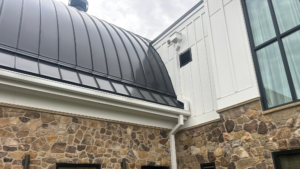
Metal roofs are known for their durability and distinctive appearance. Standing-seam metal systems feature raised seams that help create a clean, contemporary look.
Depending on the product and installation, metal roofing can offer a long service life and effective weather resistance.
Potential benefits include:
- Long-term durability
- Modern or traditional design options
- Low routine maintenance
- Reflective finish options
- Resistance to many common weather-related issues
Metal roofing typically has a higher upfront cost than standard asphalt shingles. Homeowners should also confirm that the selected system is suitable for the roof design and installed according to manufacturer requirements.
Slate Roofing
Slate roofing may be appropriate for homes with traditional, historic, or upscale architectural designs.
Natural slate offers a distinctive appearance and can provide a very long service life when installed correctly. However, it is heavier than many other roofing materials.
The roof structure must be designed to support the material’s weight. Installation also requires specialized expertise.
Slate may involve a higher initial investment, but homeowners seeking a premium roof covering may find it appealing.
Synthetic Roofing Materials
Synthetic roofing products are designed to imitate the appearance of materials such as slate or wood shakes.
They may offer a lighter-weight alternative to natural products and can be available in different colors and styles.
The performance of synthetic roofing depends on the product’s design, quality, installation instructions, and warranty.
Homeowners should review the manufacturer’s documentation before selecting a synthetic roofing system.
The Main Steps in New Construction Roof Installation
A professional roofing project follows a series of important stages. The exact process depends on the selected roofing material, roof design, and construction requirements.
1. Roof Framing and Structural Preparation
The roofing process begins after the roof framing is completed.
Framing components create the structure that supports the roof deck and roofing assembly. These components must be installed according to the home’s structural plans.
The roofing contractor should coordinate with the builder to confirm that the roof is ready for sheathing and roofing work.
Any concerns involving framing alignment, structural condition, or design details should be addressed before roofing materials are installed.
2. Roof Deck Installation
Roof decking, commonly called roof sheathing, provides the surface on which the roofing system is installed.
Plywood and oriented strand board are common residential sheathing materials. The appropriate material and thickness depend on the building design, spacing of framing members, and selected roofing system.
The deck should be properly fastened and prepared. Gaps, damaged panels, uneven surfaces, or other issues should be addressed before the next installation stage.
A stable, properly prepared deck helps support the roofing material and contributes to overall roof performance.
3. Roof Deck Inspection
Before covering the deck, the construction team should verify that the sheathing has been installed correctly.
Inspection may include checking:
- Panel alignment
- Fastener placement
- Structural condition
- Surface irregularities
- Openings and penetrations
- Roof edges
- Valleys and transitions
This stage is important because problems beneath the roofing material may become difficult to access after installation.
4. Installing Drip Edge
Drip edge is a metal component installed along roof edges to help guide water away from the roof deck and fascia.
It helps protect the roof perimeter and supports proper water drainage into the gutter system.
The placement of drip edge in relation to underlayment can vary by roof edge and installation requirements. The roofing contractor should follow the appropriate installation instructions for the selected roofing system.
5. Installing Roof Underlayment
Underlayment is a protective layer installed over the roof deck beneath the primary roof covering.
It provides additional protection against moisture and helps protect the deck during construction and after the roof covering is installed.
Common underlayment options include synthetic products and asphalt-saturated felt. Self-adhered membranes may be used in selected areas where additional protection is required or specified.
Underlayment must be installed with the proper overlaps, fastening methods, and integration with flashing.
For homeowners, this is an important part of new construction roof installation because the underlayment contributes to the roof assembly’s overall moisture protection.
6. Installing Additional Water Protection
Certain roof areas are more vulnerable to water intrusion. These may include eaves, valleys, and other locations where water can accumulate or back up.
Water-resistant membrane products are designed to provide additional protection in selected areas.
The roofing contractor should determine where additional protection is appropriate based on the roof design, climate exposure, and the selected roofing system.
7. Installing Flashing
Flashing is one of the most important components of a roofing system.
It helps direct water away from vulnerable transitions, including:
- Roof-to-wall intersections
- Chimneys
- Skylights
- Plumbing vents
- Valleys
- Dormers
- Other roof penetrations
Flashing must be integrated properly with the underlayment and roof covering. Incorrect installation can create pathways for water intrusion even when the main roofing material is installed correctly.
A reliable roofing installation gives careful attention to flashing details rather than relying only on the visible roof covering.
8. Installing the Primary Roofing Material
Once the deck, underlayment, and required flashing are prepared, the roofing contractor installs the selected roof covering.
For asphalt shingles, the process includes starter shingles, field shingles, fastening, alignment, and ridge components.
Metal roofing may involve panel placement, clips or fasteners, seam connections, and trim components.
Slate and other specialty roofing materials have their own installation requirements.
The roofing contractor should follow manufacturer specifications for fastening, overlap, spacing, and installation conditions.
9. Completing Ridge and Roof Ventilation Components
Ridge caps, ridge vents, and other ventilation components may be installed during the final roofing stages.
The ventilation system should be designed to work with the attic or roof assembly. Intake and exhaust ventilation need to be considered together.
Proper ventilation can help manage heat and moisture, but it must be coordinated with insulation and air sealing.
10. Final Inspection and Cleanup
Once the roofing material is installed, the contractor should perform a final inspection.
The inspection may include checking:
- Shingle or panel alignment
- Fastener installation
- Flashing details
- Roof penetrations
- Ridge and hip components
- Drainage areas
- Roof edges
- Visible defects
The construction site should also be cleaned of roofing debris and excess materials.
The homeowner or builder should receive appropriate project documentation, including warranty information and maintenance recommendations.
Roof Ventilation and Insulation in New Construction
A roof is part of a larger building system. Ventilation, insulation, and air sealing should be planned together.
Why Roof Ventilation Matters
Ventilation can help manage heat and moisture within a properly designed attic.
In a vented attic, intake vents often allow outside air to enter near the eaves, while exhaust vents allow air to leave near the ridge or another appropriate location.
The ventilation layout should be appropriate for the attic configuration and should not be obstructed by insulation.
The Importance of Attic Insulation
Insulation helps reduce heat transfer between the living space and the attic or roof assembly.
The amount and type of insulation should be suited to the home’s design and energy-efficiency goals.
Poorly installed insulation may leave gaps or compressed areas that reduce its effectiveness.
Air Sealing
Air sealing helps limit uncontrolled movement of indoor air into attic spaces.
Air leakage can contribute to moisture accumulation and energy loss. Areas around ceiling penetrations, attic access points, and other openings may need attention.
A well-planned new construction roof installation should coordinate roofing work with the home’s insulation and air-sealing strategy.
Factors That Affect New Construction Roofing Costs
The cost of new construction roof installation can vary significantly from one home to another.
Homeowners should consider the following factors when developing a roofing budget.
Roof Size
Larger roofs require more materials and labor.
Roof size is generally measured by roofing area, and contractors may use the term “square” to represent 100 square feet of roofing.
Roof Complexity
A simple roof may require fewer labor hours than a complex roof with multiple valleys, dormers, hips, and penetrations.
Complex designs require additional measurements, flashing, and installation details.
Roofing Material
Material selection has a major influence on project cost.
Asphalt shingles generally offer more budget-friendly options, while metal, slate, and specialty products may require a higher investment.
Labor and Installation Requirements
Labor costs depend on the roof’s pitch, accessibility, complexity, and selected material.
Specialty roofing systems may require installers with specific experience or equipment.
Underlayment and Flashing
The roof assembly may include several protective components beyond the visible roof covering.
The amount and type of underlayment, flashing, drip edge, and other materials affect the overall project budget.
Ventilation and Structural Considerations
Some homes require additional ventilation components or specific structural design considerations.
These requirements should be addressed during planning rather than left until the roofing crew is ready to install the roof.
Homeowners should request a detailed estimate that identifies the roofing material, installation scope, included components, and any exclusions.
Common Mistakes to Avoid During New Roof Installation
Even high-quality roofing materials can underperform when installation errors occur. Homeowners should understand some of the common mistakes that can affect a newly installed roof.
Incorrect Fastener Placement
Roofing fasteners must be installed in the locations specified by the manufacturer. Incorrect placement can weaken the attachment and affect the roof’s resistance to wind.
For asphalt shingles, improper nailing may prevent shingles from sealing or securing as intended. Metal roofing systems also require specific fastening patterns and attachment methods.
Poor Flashing Installation
Flashing failures are a common source of roof leaks. If flashing is not correctly integrated with the roof covering and adjacent building materials, water may enter at vulnerable transitions.
Chimneys, skylights, valleys, and roof-to-wall intersections deserve particular attention during installation.
Improper Roof Ventilation
Ventilation should be planned based on the roof and attic design. Installing vents without considering intake airflow, exhaust airflow, insulation, and air sealing can create an ineffective system.
Using Incompatible Materials
Roofing components should be compatible with one another. Underlayment, fasteners, flashing, sealants, and roof coverings should meet the specifications of the roofing system.
Using unsuitable components can affect durability and may create warranty concerns.
Ignoring Weather Conditions
Roofing materials should be installed under conditions allowed by their manufacturers. Rain, strong winds, extreme temperatures, or wet decking can interfere with installation.
Construction schedules should allow the roofing contractor to protect the roof and complete the work safely.
How Homeowners Can Evaluate Roofing Contractors
Choosing an experienced roofing contractor is an important part of a successful new construction roof installation.
Homeowners and builders should evaluate contractors based on their experience, communication, installation practices, and familiarity with residential roofing systems.
Review Roofing Experience
A contractor should have experience installing the type of roof selected for the home.
Asphalt shingles, metal roofing, slate, and specialty materials have different requirements. Experience with the specific roofing system can help support accurate installation and quality control.
Confirm Licensing and Insurance
Homeowners should verify the contractor’s credentials and insurance coverage as appropriate for the project.
This helps ensure that the roofing work is performed by a qualified professional and that important responsibilities are addressed.
Request a Detailed Estimate
A clear estimate should describe the roofing material, installation scope, included components, labor, and applicable warranty information.
The estimate should also clarify how additional work will be handled if unexpected conditions are discovered.
Understand Warranty Coverage
Roofing warranties may include manufacturer coverage for materials and separate workmanship coverage from the contractor.
The terms, exclusions, duration, and maintenance requirements can vary.
Homeowners should review the documentation carefully and keep copies with their construction records.
Prioritize Communication
Roofing work is part of a larger construction schedule. A contractor who communicates clearly about material delivery, installation timing, quality checks, and potential delays can help the project stay organized.
Maintaining a Newly Installed Roof
A new roof still requires regular care. Maintenance helps homeowners identify minor issues before they develop into more serious problems.
Schedule Routine Roof Inspections
Homeowners should arrange periodic inspections, particularly after severe weather or when there are signs of a potential issue.
A professional inspection can help identify loose roofing components, damaged flashing, clogged drainage areas, or other concerns.
Keep Gutters and Downspouts Clear
Gutters and downspouts help direct water away from the home. Leaves, twigs, and other debris can obstruct drainage and contribute to overflow.
Routine cleaning is especially important during spring and fall.
Monitor Attic Conditions
Homeowners can occasionally check the attic for signs of moisture, unusual odors, staining, or ventilation concerns.
Any suspected issue should be evaluated by a qualified professional.
Trim Overhanging Branches
Branches that hang over the roof can drop leaves and debris. They may also scrape against roofing materials during windy conditions.
Trimming overhanging branches where appropriate can reduce debris accumulation and physical damage.
Keep Roofing Records
Homeowners should retain installation documents, material information, warranty paperwork, inspection records, and maintenance notes.
These records can be useful when arranging repairs, reviewing warranty terms, or selling the property.
Preparing for a Successful New Construction Roof Installation
A successful roof installation begins well before roofing materials are placed on the home. Proper planning, accurate measurements, appropriate material selection, coordination with the builder, and professional workmanship all contribute to the finished roofing system.
Homeowners in Arlington, VA and the surrounding areas should consider local weather conditions, roof design, material durability, energy efficiency, and long-term maintenance when making roofing decisions.
The roof should be viewed as a complete assembly rather than a single layer of shingles or panels. Decking, underlayment, flashing, ventilation, insulation, and drainage all play important roles in protecting the home.
Painter Roofing understands the importance of quality roofing and dependable exterior protection. When planning a new home, working with an experienced roofing professional can help homeowners make informed decisions and ensure that important installation details receive proper attention.
A well-planned new construction roof installation can provide reliable protection, support the home’s energy performance, enhance curb appeal, and contribute to long-term property value.
Conclusion
Building a new home requires careful attention to every major component, and the roof is one of the most important investments homeowners make. A dependable roofing system protects the structure from weather exposure, supports indoor comfort, and helps preserve the condition of the home’s interior and exterior.
Understanding new construction roof installation allows homeowners to participate more confidently in the building process. From selecting roofing materials and preparing the roof deck to installing underlayment, flashing, ventilation, and the final roof covering, every stage contributes to the overall performance of the system.
For homeowners in Arlington, VA and the surrounding areas, choosing quality materials and professional installation is essential for creating a roof that can withstand seasonal weather conditions and provide lasting protection.
Painter Roofing is committed to helping homeowners understand their roofing needs and make informed decisions about their home’s exterior. Whether your new home will feature asphalt shingles, metal roofing, or another roofing material, proper planning and quality workmanship can make a meaningful difference.