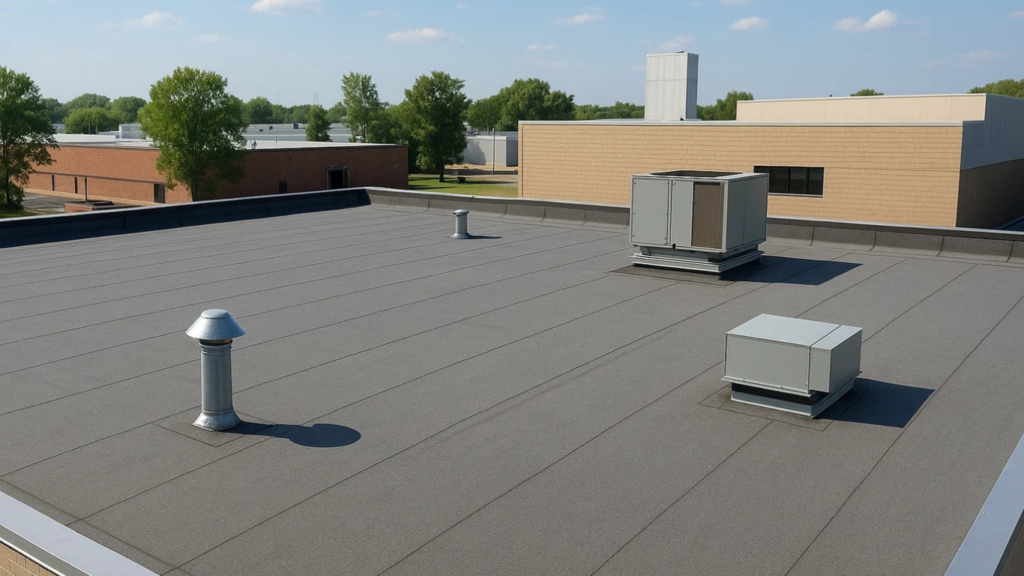
Flat and low-slope roofs require specialized roofing systems designed to handle water drainage, weather exposure, and long-term structural protection. For many homeowners in Arlington, VA and the surrounding Northern Virginia communities, modified bitumen roofing has become a trusted and reliable solution for flat roof protection.
Originally developed as an improvement over traditional built-up roofing systems, modified bitumen roofing combines modern polymer technology with durable asphalt layers to create a strong, flexible, and weather-resistant roofing membrane. This roofing system is widely used across residential and commercial buildings due to its durability, waterproofing ability, and relatively affordable installation costs.
At Painter Roofing, we frequently install and repair modified bitumen roofing systems for homes throughout Arlington. This comprehensive guide explains how the system works, its advantages, installation methods, lifespan expectations, and why it remains one of the most dependable flat roofing options available.
What Is Modified Bitumen Roofing?
Modified bitumen roofing is a multi-layer asphalt-based roofing system designed for flat or low-slope roofs. The material is created by combining traditional asphalt with polymer modifiers such as APP (atactic polypropylene) or SBS (styrene-butadiene-styrene). These modifiers improve flexibility, durability, and temperature resistance.
The system is typically installed in layers that may include:
- Base sheets
- Reinforced membranes
- Cap sheets
- Protective coatings or granules
The result is a strong waterproof surface that can handle environmental stress and long-term exposure.
One of the major advantages of modified bitumen roofing is its layered construction, which provides excellent durability and leak protection for flat roofs.
Why Modified Bitumen Roofing Is Popular in Arlington, VA
Homes in Arlington experience a wide range of weather conditions throughout the year. Summers can be hot and humid, while winters bring freezing temperatures and occasional snow. Storms, wind, and heavy rainfall also occur regularly.
These conditions can be challenging for flat roofs, which must manage water drainage differently from sloped roofs. Modified bitumen roofing performs well in these environments due to its waterproof design and strong weather resistance.
For homeowners in Arlington and surrounding communities, modified bitumen roofing provides dependable protection against:
- Heavy rainstorms
- Temperature fluctuations
- UV exposure
- Snow and ice
- Wind uplift
- Tree debris
These features make it an excellent option for homes with flat roof sections or low-slope structures.
Key Features of Modified Bitumen Roofing
One reason modified bitumen roofing remains popular is its combination of modern technology and proven durability.
Important features include:
Multi-Layer Protection
The layered structure of modified bitumen roofing adds durability and redundancy. Multiple layers help prevent leaks and improve overall strength.
Reinforced Membranes
Most modified bitumen roofing membranes contain fiberglass or polyester reinforcement. This reinforcement improves tear resistance and structural stability.
Flexible Polymer Additives
Polymer modification allows the material to expand and contract with temperature changes without cracking or splitting.
Granulated Surface
Many modified bitumen roofing systems include mineral granules on the surface. These granules protect the membrane from UV radiation and improve durability.
Types of Modified Bitumen Roofing Systems
There are two primary types of modified bitumen roofing, each designed for specific performance characteristics.
APP Modified Bitumen
APP (atactic polypropylene) modified membranes are designed for heat-welded or torch-applied installation. This type provides strong waterproofing and UV resistance.
APP modified bitumen roofing is known for:
- Excellent heat resistance
- Strong waterproof sealing
- Durable surface protection
- Long-lasting performance
SBS Modified Bitumen
SBS (styrene-butadiene-styrene) modified membranes are rubber-like in flexibility. They are often applied using adhesives or cold-applied systems.
SBS modified bitumen roofing offers:
- Exceptional flexibility
- Crack resistance
- Cold weather durability
- Improved elasticity
Painter Roofing helps homeowners choose the best type of modified bitumen roofing based on roof structure and environmental conditions.
Advantages of Modified Bitumen Roofing
There are many reasons homeowners choose modified bitumen roofing for flat or low-slope roofs.
Excellent Waterproof Protection
Waterproofing is one of the most important benefits of modified bitumen roofing. The layered membrane creates a strong barrier that prevents water infiltration.
This is especially important in Arlington, where seasonal storms and heavy rainfall can put significant stress on roofing systems.
Long Lifespan
With proper installation and maintenance, modified bitumen roofing can last 20 to 30 years or longer. The durable membrane resists weather damage and environmental aging.
Strong Resistance to Foot Traffic
Flat roofs often require occasional access for maintenance or inspections. Modified bitumen roofing handles foot traffic better than many single-ply systems.
This makes it ideal for roofs that require service access.
Weather and Temperature Resistance
Northern Virginia’s seasonal temperature changes can cause roofing materials to expand and contract. The flexible polymers used in modified bitumen roofing allow the membrane to move without cracking.
Impact Resistance
The reinforced layers of modified bitumen roofing provide strong resistance to impact from falling debris or hail.
Homes located near trees benefit from this added protection.
Affordable Installation Cost
Compared to many other flat roofing systems, modified bitumen roofing offers excellent durability at a moderate price point.
This balance between cost and performance makes it attractive to homeowners planning roof replacements.
Installation Methods for Modified Bitumen Roofing
Professional installation ensures the long-term success of modified bitumen roofing systems.
Several installation techniques are commonly used.
Torch-Applied Installation
In this method, heat is used to bond the membrane directly to the roof surface. Torch application creates a strong waterproof seal.
Torch-applied modified bitumen roofing provides excellent adhesion and durability.
Cold Adhesive Installation
Cold adhesives are sometimes used instead of heat. This method reduces fire risk and can be ideal for residential properties.
Self-Adhered Systems
Some modern modified bitumen roofing products include peel-and-stick backing. These systems simplify installation and improve safety.
Painter Roofing selects the installation method that best suits each home’s design and safety requirements.
Modified Bitumen Roofing vs Other Flat Roofing Systems
Understanding how modified bitumen roofing compares to other systems helps homeowners choose the best option.
Modified Bitumen vs TPO Roofing
TPO is a single-ply membrane known for reflectivity, while modified bitumen roofing offers multi-layer protection and better impact resistance.
Modified Bitumen vs EPDM Roofing
EPDM is flexible rubber, while modified bitumen roofing provides thicker multi-layer construction and improved puncture resistance.
Modified Bitumen vs Built-Up Roofing
Traditional built-up roofing systems require more layers and heavier installation, while modified bitumen roofing provides similar durability with easier installation.
Each roofing system has benefits, but many homeowners appreciate the durability and reliability of modified bitumen roofing.
Homes That Benefit Most from Modified Bitumen Roofing
Certain residential structures are especially well-suited for modified bitumen roofing, including:
- Flat roof homes
- Low-slope roofs
- Home additions
- Garage roofs
- Porch roofs
- Townhomes and row houses
These structures require durable waterproof membranes capable of handling limited drainage slopes.
Energy Efficiency Considerations
While traditional modified bitumen roofing is dark in color, modern systems can include reflective coatings or cool-roof surfaces.
These reflective options help reduce heat absorption and improve energy efficiency.
Benefits include:
- Lower attic temperatures
- Reduced cooling costs
- Improved indoor comfort
Energy-efficient roofing is increasingly important for homeowners in Arlington’s warm summers.
Maintenance and Inspection
Routine maintenance extends the lifespan of modified bitumen roofing.
Homeowners should schedule periodic inspections to check for:
- Surface damage
- Seam separation
- Drainage issues
- Debris buildup
- Flashing deterioration
Regular maintenance helps prevent leaks and prolongs roof performance.
Painter Roofing provides professional inspections and repair services to keep modified bitumen roofing systems functioning properly.
Common Repairs for Modified Bitumen Roofing
Like all roofing systems, occasional repairs may be needed over time.
Typical repairs include:
- Membrane patching
- Seam resealing
- Flashing repair
- Drain clearing
- Surface coating restoration
Prompt repair prevents small issues from developing into larger structural problems.
Lifespan Expectations
The lifespan of modified bitumen roofing depends on several factors, including installation quality, climate conditions, and maintenance.
On average, homeowners can expect:
- 20 to 30 years of service life
- Longer lifespan with proper maintenance
- Reduced repair frequency compared to older roofing systems
Professional installation by experienced contractors plays a major role in maximizing roof longevity.
Why Professional Installation Matters
Proper installation is critical for modified bitumen roofing systems. Improper application can lead to seam failure, leaks, or premature deterioration.
Hiring an experienced roofing contractor ensures:
- Correct membrane placement
- Proper seam sealing
- Adequate drainage design
- Structural compatibility
- Building code compliance
Painter Roofing has extensive experience installing modified bitumen roofing systems across Arlington and Northern Virginia.
Why Arlington Homeowners Choose Painter Roofing
Painter Roofing is proud to serve homeowners throughout Arlington, VA and nearby communities. Our team understands the unique roofing challenges created by the region’s climate and architecture.
Homeowners trust Painter Roofing for:
- Professional roof inspections
- Expert flat roof installation
- High-quality materials
- Skilled craftsmanship
- Honest recommendations
- Long-lasting results
Whether repairing an existing roof or installing a new system, our team ensures every modified bitumen roofing project meets the highest standards.
Final Thoughts: Is Modified Bitumen Roofing Right for Your Home?
Flat and low-slope roofs require durable materials capable of handling water exposure, weather extremes, and long-term structural stress. Modified bitumen roofing provides a dependable solution with strong waterproofing, flexibility, and durability.
For homeowners in Arlington, VA and surrounding Northern Virginia communities, modified bitumen roofing remains one of the most reliable flat roofing systems available. Its multi-layer design, weather resistance, and long lifespan make it a practical investment for protecting residential properties.
If your home has a flat roof or you’re planning a roof replacement, professional evaluation can help determine whether modified bitumen roofing is the best choice.