Strong winds can cause serious problems for residential roofing systems. Even when a roof looks intact from the ground, wind can loosen shingles, damage flashing, expose underlayment, and create openings where rainwater can enter. In Arlington, VA, and surrounding Northern Virginia communities, seasonal storms and high-wind events make it important for homeowners to recognize potential roof damage and respond promptly.
Professional wind damage roof repair can help prevent a relatively small problem from becoming a larger roofing or water-damage issue. Addressing damaged roofing materials quickly can also help protect insulation, ceilings, walls, attic components, and other parts of the home.
Understanding Wind Damage to Residential Roofs
Wind does not always damage a roof in obvious ways. High winds can lift the edges of shingles, loosen fasteners, damage flashing, and create small openings that may not be visible from the ground.
The severity of damage depends on several factors, including wind speed, storm duration, roof age, roofing material, installation quality, surrounding trees, and the overall condition of the roofing system.
A newer roof may withstand ordinary weather conditions well, but severe winds can still cause isolated damage. Older roofing systems may be more vulnerable because materials have already experienced years of ultraviolet exposure, temperature changes, moisture, and normal deterioration.
Professional wind damage roof repair begins with identifying exactly which parts of the roofing system have been affected.
Common Causes of Wind-Related Roof Damage
Wind damage can occur during thunderstorms, severe weather systems, hurricanes, tropical storms, and other high-wind events.
Some common causes include:
- Strong wind gusts lifting shingles
- Falling tree branches striking the roof
- Debris being blown across roofing surfaces
- Wind-driven rain entering damaged areas
- Loose flashing being displaced
- Damaged vents or roof accessories
- Weak or deteriorated roofing materials
- Improperly secured roofing components
Wind can also expose pre-existing weaknesses. A roofing component that was already deteriorating may become displaced during a storm, making the underlying issue more apparent.
Signs of Wind Damage on a Roof
Homeowners should conduct a safe visual inspection from the ground after a significant storm. Climbing onto the roof without proper equipment and training can be dangerous, particularly after severe weather.
Visible warning signs may include:
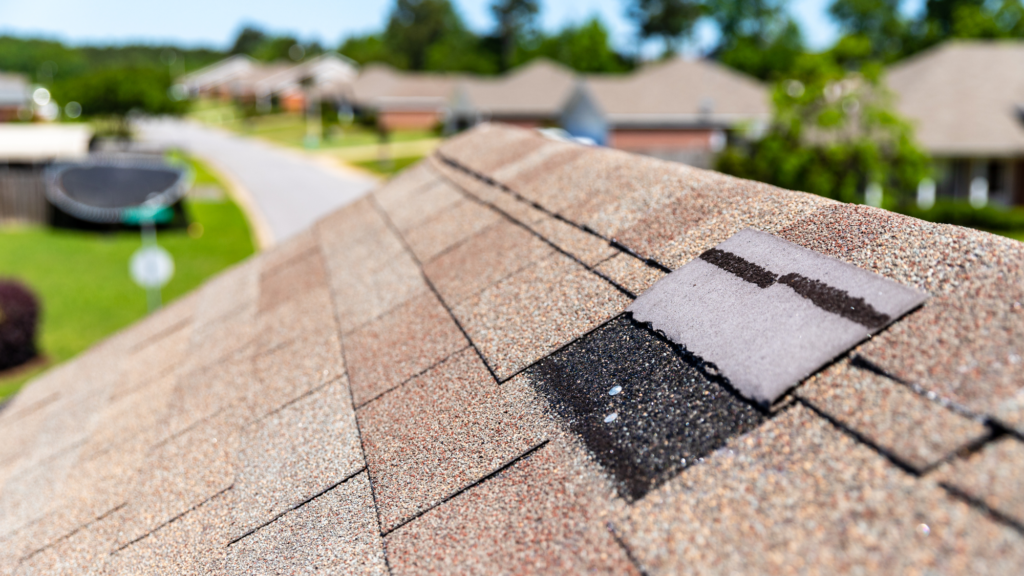
Missing Shingles
Missing shingles are one of the most recognizable signs of wind damage. When shingles are blown away, the exposed area may be vulnerable to moisture intrusion.
Even a relatively small missing section should be evaluated because the roofing system is designed to function as a continuous protective surface.
Lifted or Raised Shingles
Shingles do not always blow completely off the roof. Strong winds may lift or loosen them while leaving them partially attached.
Raised shingles can create pathways for water and may become increasingly damaged during subsequent storms.
Creased Shingles
Wind can bend or crease asphalt shingles, particularly when the adhesive bond or fastening system has been compromised.
Creased materials may not provide the same protection as properly installed shingles and may require professional attention.
Damaged Flashing
Flashing around chimneys, skylights, vents, walls, and roof transitions can be affected by high winds.
Loose or displaced flashing can allow water to enter vulnerable areas even when the surrounding shingles appear undamaged.
Fallen Tree Limbs
Tree branches can cause impact damage in addition to wind damage. A branch landing on the roof may crack shingles, damage decking, puncture roofing materials, or affect structural components.
Any roof that has been struck by a substantial branch should receive a professional evaluation.
Granules in Gutters
After a storm, homeowners may notice an unusual amount of shingle granules in their gutters or downspouts.
Granule loss can occur naturally over time, but a sudden increase after severe weather may indicate that roofing materials have been affected.
Why Prompt Wind Damage Roof Repair Matters
Roof damage can become more serious when it is left exposed to additional weather.
A missing or displaced shingle may allow rainwater to reach underlayment or roof decking. Once moisture enters the roofing assembly, it may eventually affect insulation, framing, ceilings, and interior finishes.
Prompt wind damage roof repair can help limit the extent of damage by addressing vulnerable areas before repeated storms create additional problems.
Quick attention is especially important when severe weather is followed by heavy rain. Water can enter through surprisingly small openings, and interior damage may not become visible immediately.
Wind Damage and Roof Leaks
One of the most common consequences of wind-related roofing damage is water intrusion.
Wind can create openings by:
- Removing shingles
- Lifting shingle edges
- Displacing flashing
- Damaging vent seals
- Creating gaps around roof penetrations
- Puncturing roofing materials with debris
Water may then travel beneath roofing materials before appearing inside the home. This means the location of an interior ceiling stain does not necessarily correspond directly with the location of the exterior roof damage.
A professional inspection can help identify the source of moisture intrusion and determine the appropriate repair.
Wind Damage to Roofing Flashing
Flashing is particularly important because it protects transitions and penetrations within the roofing system.
Common flashing locations include:
- Chimneys
- Skylights
- Roof-to-wall transitions
- Plumbing vents
- Valleys
- Dormers
- Other roof penetrations
High winds can loosen or shift flashing, particularly when components are already aged or deteriorated.
A wind damage roof repair inspection should therefore evaluate flashing as well as shingles. Replacing damaged shingles without addressing compromised flashing may leave the underlying problem unresolved.
Wind Damage to Gutters and Roof Edges
Roof edges can experience significant wind exposure. Gutters, fascia, soffits, and drip edges may also be affected during severe storms.
Damaged gutters can pull away from the fascia or become bent and displaced. This can interfere with proper water drainage.
Homeowners should also inspect the area around the roof perimeter for visible signs of:
- Loose gutters
- Detached downspouts
- Damaged fascia
- Bent drip edges
- Loose soffit components
- Displaced trim
Because these components work together, roof repairs may need to include related exterior repairs when storm damage affects multiple areas.
Wind Damage and Roof Ventilation Components
Roof vents can also be vulnerable during high winds. Damaged or displaced vents can allow water to enter the roofing system.
Ventilation components should be inspected after major storms, especially when homeowners notice:
- Loose vent covers
- Damaged flashing
- Missing vent components
- Water stains around attic areas
- Visible openings around vents
Proper ventilation helps regulate attic conditions, but ventilation components must also remain properly sealed and secured to protect against weather.
How Roof Age Affects Wind Damage
The age of a roof can influence how it responds to strong winds.
Older roofing materials may have experienced years of:
- Sun exposure
- Temperature fluctuations
- Rain
- Snow and ice
- Wind
- Moisture
- Normal wear
As roofing materials age, their ability to withstand severe weather may decline.
This does not mean every older roof requires replacement after a storm. A professional inspection can help determine whether localized wind damage roof repair is appropriate or whether broader roofing work should be considered.
Wind Damage and Different Roofing Materials
Different roofing materials respond differently to wind.
Asphalt shingles are common on residential properties and can experience lifting, cracking, tearing, and displacement.
Other roofing materials may have different vulnerabilities involving seams, fasteners, panels, flashing, or attachment points.
Regardless of the roofing material, professional evaluation should consider the entire roofing assembly rather than focusing on one visible component.
The Wind Damage Roof Repair Inspection Process
A professional roof inspection after a wind event typically begins with an evaluation of visible exterior conditions.
The inspection may include:
Exterior Roofing Materials
The roof surface is evaluated for missing, lifted, cracked, or displaced materials.
Flashing and Penetrations
Roof transitions and penetrations are examined for movement, deterioration, and potential openings.
Gutters and Roof Edges
Drainage components and roof perimeter materials are checked for storm-related displacement.
Attic and Interior Areas
When appropriate, the attic and interior areas may be evaluated for signs of moisture intrusion.
Surrounding Property
Trees, branches, exterior structures, and other potential sources of impact damage may also be considered.
This comprehensive approach helps determine the scope of wind damage roof repair rather than relying solely on what can be seen from the ground.
Temporary Protection After Wind Damage
Sometimes permanent repairs cannot be completed immediately after a severe storm.
Temporary protection may be necessary to reduce additional water intrusion while permanent work is being arranged.
Depending on the circumstances, temporary measures may include protective coverings or other appropriate weatherproofing solutions.
Temporary protection should be viewed as a short-term measure rather than a replacement for permanent wind damage roof repair.
Once conditions are safe and appropriate materials are available, the roof should receive the necessary permanent repairs.
Wind Damage and Interior Water Damage
Roof damage can eventually affect areas throughout the home.
Water entering through a damaged roof may affect:
- Attic insulation
- Roof decking
- Ceiling drywall
- Interior walls
- Wood framing
- Electrical components
- Paint and finishes
The longer moisture remains present, the greater the potential for secondary damage.
Homeowners who notice water stains or dripping after a storm should address the situation promptly. If electrical fixtures are affected by water, safety should be prioritized and qualified professionals should be contacted as appropriate.
Arlington, VA Weather and Wind Damage
Arlington and surrounding Northern Virginia communities experience a variety of weather conditions throughout the year. Thunderstorms, strong wind gusts, heavy rainfall, and seasonal storms can place stress on residential roofing systems.
Storm damage does not always occur as dramatic structural failure. In many cases, damage is limited to individual shingles, flashing, vents, gutters, or other components.
This is one reason professional inspection is valuable after severe weather. Small problems can be difficult to identify from ground level.
Painter Roofing provides roofing services for homeowners throughout Arlington, VA, and surrounding communities and can help evaluate roofing conditions following weather events.
Wind Damage Roof Repair and Insurance Documentation
Storm-related roof damage may involve insurance considerations. Homeowners should review their individual policy and understand the requirements associated with documenting and reporting property damage.
Photographs can help document visible conditions after a storm. Homeowners may also want to keep records of:
- The date of the storm
- Inspection dates
- Visible damage
- Repair estimates
- Previous roofing work
- Maintenance records
- Communications with insurance representatives
Professional documentation can provide useful information when determining the scope of repairs.
Insurance coverage varies by policy, and homeowners should work directly with their insurance provider regarding coverage and claim requirements.
Avoiding DIY Wind Damage Roof Repair
Some homeowners may be tempted to climb onto the roof and make immediate repairs after a storm.
Roofing work can be dangerous, especially when shingles are loose, surfaces are wet, structural components are damaged, or debris remains on the roof.
Attempting repairs without appropriate training can also cause additional damage.
Professional wind damage roof repair provides homeowners with a safer way to address storm-related roofing problems while ensuring that damaged components are evaluated as part of the larger roofing system.
Homeowners can still play an important role by documenting visible damage, monitoring interior areas, and contacting a professional when roofing problems are suspected.
Common Wind Damage Roof Repair Mistakes
Waiting for a Leak
A roof can have exterior damage without immediately showing interior signs. Waiting until water enters the home may allow additional deterioration to occur.
Inspecting Only the Shingles
Wind can damage flashing, vents, gutters, fascia, and other components. A complete inspection should consider the entire roofing system.
Ignoring Small Damage
Small openings can become larger during subsequent weather events. Addressing minor damage early can help reduce the possibility of more extensive repairs.
Using Temporary Fixes as Permanent Repairs
Temporary coverings may protect the home while permanent repairs are arranged, but they should not be treated as a long-term solution.
Walking on the Roof After a Storm
Roof surfaces may be unstable or slippery following severe weather. Professional evaluation is generally safer.
Ignoring Attic Signs
Interior moisture signs can provide important information about roofing conditions. Attic stains, damp insulation, and unusual moisture should receive attention.
Preventing Future Wind Damage
No roofing system can eliminate every risk associated with severe weather, but regular maintenance can help improve overall roof condition.
Preventive measures include:
- Scheduling regular professional inspections
- Replacing deteriorated roofing materials
- Keeping gutters clear
- Maintaining roof flashing
- Trimming nearby trees
- Securing vulnerable exterior components
- Monitoring roof age
- Addressing minor damage promptly
- Maintaining proper attic ventilation
A well-maintained roof may be better positioned to withstand ordinary weather conditions and can make storm-related problems easier to identify.
Tree Maintenance and Wind Damage Prevention
Trees near a home provide shade and landscaping benefits, but they can also become a source of roof damage during high winds.
Dead or weakened branches can fall onto roofing surfaces. Overhanging branches may also scrape shingles or deposit large amounts of debris.
Regular tree maintenance can reduce these risks.
Homeowners should have large or potentially hazardous trees evaluated by qualified tree professionals, particularly when branches are close to the home or appear unstable.
The Importance of Regular Roof Inspections
Routine roof inspections are useful even when there has not been a major storm.
Regular inspections can identify gradual deterioration that may reduce a roof’s ability to withstand severe weather.
Professional inspections can evaluate conditions such as:
- Aging shingles
- Deteriorated flashing
- Loose components
- Damaged roof edges
- Drainage problems
- Ventilation issues
- Signs of previous leaks
Maintaining a roof before severe weather arrives can reduce the number of vulnerabilities that a storm may exploit.
When Wind Damage Requires Roof Replacement
Not every storm-damaged roof requires replacement.
Localized wind damage roof repair may be appropriate when damage is limited to a manageable portion of the roofing system and the remaining materials are in good condition.
Roof replacement may become more appropriate when damage is widespread, the roof is already significantly deteriorated, or repairs would not provide a reliable long-term solution.
The decision should be based on the roof’s overall condition rather than the presence of a single damaged shingle.
A professional evaluation can help homeowners understand the available repair or replacement options.
Maintaining Your Roof After Wind Damage
Once repairs have been completed, homeowners should continue monitoring the roof.
Follow-up maintenance can include:
- Checking repaired areas during future inspections
- Keeping gutters clean
- Watching for new missing or lifted shingles
- Maintaining trees around the property
- Monitoring attic conditions
- Scheduling professional inspections
- Addressing additional storm damage promptly
Roofing is an ongoing part of home maintenance. A completed repair should be viewed as part of a larger strategy for protecting the property.
Why Professional Wind Damage Roof Repair Matters
Professional wind damage roof repair is about more than replacing visible shingles. A proper evaluation considers the roof as an integrated system.
The goal is to identify the source and extent of damage, protect the home from additional moisture intrusion, and determine which repairs are appropriate based on the roof’s condition.
For homeowners in Arlington, VA, professional assistance can be especially useful after strong storms when damage may be difficult to identify from the ground.
Painter Roofing can help homeowners evaluate storm-related roofing concerns and determine appropriate next steps for repairs and ongoing maintenance.
Painter Roofing for Arlington-Area Homeowners
Painter Roofing serves homeowners in Arlington, VA, and surrounding Northern Virginia communities with roofing and exterior services.
When wind affects a home, homeowners need a dependable approach to evaluating the condition of their roof. Painter Roofing can help identify visible storm-related problems and provide professional guidance regarding repairs.
The company’s broader roofing and exterior services can also support homeowners with ongoing maintenance designed to keep the property’s protective systems in good condition.
Addressing roofing problems promptly can help homeowners protect their investment and reduce the possibility of additional damage.
Final Thoughts on Wind Damage Roof Repair
Strong winds can affect many parts of a residential roofing system, from shingles and flashing to gutters, vents, fascia, and roof decking. Some damage is immediately visible, while other problems may remain hidden until water begins entering the home.
That is why prompt wind damage roof repair is an important part of post-storm home maintenance.
Homeowners in Arlington, VA, and surrounding areas should monitor their roofs after significant wind events, watch for visible warning signs, and seek professional evaluation when damage is suspected. Regular inspections and preventive maintenance can also help identify vulnerabilities before the next major storm.